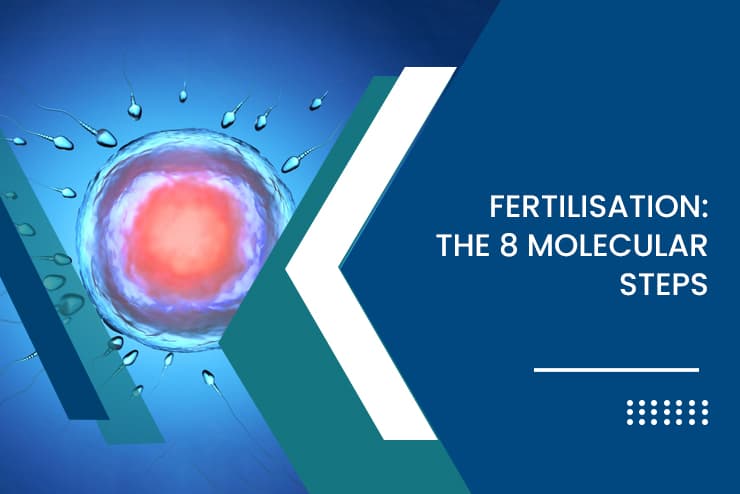
Fertilisation: The 8 Molecular Steps
From Cumulus Penetration to Pronucleus Formation
A deep-dive molecular guide to every sequential event of fertilisation — the biochemistry, the proteins, the clinical parallels — for students of clinical embryology and reproductive biology.
The 8 Steps at a Glance
Fertilisation is not a single event — it is a precisely sequenced molecular cascade of eight distinct steps, each with specific molecules, receptors, and signals. Failure of any single step halts the entire process. This guide examines each step in full biochemical and clinical depth.
The eight steps are: Cumulus Penetration, Zona Pellucida Binding, Acrosomal Reaction, Zona Penetration, Sperm-Oocyte Fusion (IZUMO1/JUNO), Oocyte Activation and Polyspermy Block, Meiosis II Completion, and Pronucleus Formation and Syngamy.
Introduction — Fertilisation as a Molecular Cascade
Fertilisation — the biological union of sperm and oocyte — is one of the most studied and yet still incompletely understood processes in reproductive biology. What makes it scientifically remarkable is its precision: out of hundreds of millions of sperm deposited, only one will successfully complete all eight sequential molecular steps required to deliver its genome into the oocyte and trigger new life.
For clinical embryologists, this cascade is not merely textbook biology. Every IVF procedure — from sperm preparation to insemination timing, from ICSI injection angle to fertilisation check interpretation — is a direct intervention in this process. Understanding the molecular detail of each step allows the embryologist to diagnose what went wrong when fertilisation fails, counsel patients accurately, and select the most appropriate treatment.
In this guide, we examine each of the eight steps in molecular and clinical depth — the molecules involved, the consequences of failure, and the IVF laboratory parallel at each stage.
Where Does Fertilisation Occur?
In vivo, fertilisation occurs in the ampulla of the uterine (Fallopian) tube — the widest, most proximal segment, located close to the ovary. The oocyte is fertilisable for approximately 12–24 hours after ovulation. Sperm can survive in the female reproductive tract for 3–5 days, stored in cervical crypts and the uterotubal junction.
In IVF, fertilisation occurs in a culture dish in the embryology laboratory, in conditions designed to mimic the tubal environment: pH 7.2–7.4, 37°C, 5–6% CO2, low oxygen (5–7% O2 in modern incubators), and culture media supplemented with amino acids, energy substrates, and growth factors.
The 8 Molecular Steps of Fertilisation
Step 01 — Penetration of the Cumulus Oophorus
Breaking through the outer cellular barrier surrounding the oocyte
The oocyte at ovulation is surrounded by a multi-layered mass of cumulus granulosa cells embedded in an expanded extracellular matrix rich in hyaluronan (hyaluronic acid), inter-alpha-trypsin inhibitor (ITI), versican, and the glycoprotein PTX3. This cumulus-oocyte complex (COC) is ovulated as a unit. Sperm must first physically penetrate this outer cellular cloud before reaching the zona pellucida.
Two complementary mechanisms drive cumulus penetration. First, mechanical: capacitated sperm have acquired hyperactivated motility — the vigorous, asymmetric, high-amplitude flagellar beating that generates the mechanical thrust required to push through the viscous hyaluronan matrix. Second, enzymatic: the sperm surface expresses hyaluronidase (SPAM1 — Sperm Adhesion Molecule 1), which partially digests the hyaluronan polymer. The precise relative contribution of mechanical vs enzymatic penetration remains debated — genetic models with SPAM1-null sperm show only mildly reduced fertility, suggesting mechanical penetration is the dominant mechanism.
The key molecule is SPAM1 (PH-20) — a GPI-anchored hyaluronidase on the sperm surface. Also involved are PH-30 (fertilin alpha and beta) and ADAM proteins on the sperm surface that mediate adhesive interactions with cumulus cell integrins. Progesterone secreted by cumulus cells activates CatSper on capacitated sperm, further boosting hyperactivation as sperm approach the COC.
Very poor sperm motility (severe asthenozoospermia) or absence of hyperactivated motility can prevent cumulus penetration. Extremely thick or poorly expanded cumulus can also resist penetration. In standard IVF, failure at this step contributes to fertilisation failure.
In standard IVF, the cumulus is left intact — sperm penetrate it naturally during co-incubation with the COC. Insemination occurs 2–4 hours post-retrieval. In ICSI, the embryologist mechanically and enzymatically removes the cumulus using a fine-bore pipette and hyaluronidase enzyme (80–100 IU/mL, brief exposure) before ICSI injection.
Step 02 — Zona Pellucida Binding
Species-specific sperm recognition and adhesion to the glycoprotein coat
After penetrating the cumulus, the sperm reaches the zona pellucida (ZP) — a 15–20 micrometre thick glycoprotein shell surrounding the oocyte. Zona binding is a species-specific molecular recognition event — a primary mechanism preventing cross-species fertilisation. Sperm must bind to specific ZP glycoproteins before the acrosomal reaction can be triggered.
The human zona is composed of four glycoproteins. ZP1 is a structural cross-linker that maintains ZP architecture. ZP2 is the secondary sperm receptor, binding the post-acrosomal membrane after the acrosomal reaction and being important for sperm penetration through the ZP. ZP3 is the primary sperm receptor — it binds capacitated, acrosome-intact sperm and triggers the acrosomal reaction upon binding. ZP4 is expressed in humans (but not mice) and contributes to sperm binding along with ZP3.
The identification of the definitive sperm ZP3 receptor has been debated for decades. Candidate receptors include SED1/MFG-E8, ZP3R (sp56), and various galactosyltransferases. The binding is lectin-like — ZP3 sugar residues (O-linked oligosaccharides on serine and threonine) interact with sperm surface lectins. Importantly, multiple sperm surface molecules may cooperatively participate in zona binding, rather than a single receptor being responsible.
Zona binding is highly species-specific: human sperm preferentially bind human ZP3 and not mouse or hamster ZP. This specificity resides in the oligosaccharide chains of ZP3. The hemizona assay uses the species specificity of ZP binding to assess sperm fertilising capacity in clinical andrology.
ZP binding deficiency is a cause of IVF fertilisation failure with otherwise normal sperm parameters. Autoimmune anti-zona antibodies (rare) can block ZP binding. Post-menopausal or poor-quality oocytes may have altered ZP glycosylation that impairs binding. In ICSI, zona binding is completely bypassed — the sperm is mechanically injected through the zona.
Step 03 — The Acrosomal Reaction
Exocytosis of acrosomal enzymes — unlocking the door to the oocyte
The acrosomal reaction (AR) is the exocytosis of the acrosome — a specialised lysosome-like organelle covering the anterior two-thirds of the sperm head. It is triggered by zona binding (ZP3/ZP4 receptor engagement) and involves the fusion of the outer acrosomal membrane with the overlying plasma membrane, releasing the acrosomal enzyme cocktail into the perivitelline space and zona pellucida.
ZP3 binding activates pertussis-toxin-sensitive G proteins (Gi) on the sperm surface, leading to activation of phospholipase C (PLC), production of IP3 and DAG, IP3 release of calcium from the acrosome (acting as an intracellular calcium store), and opening of plasma membrane calcium channels (including CRAC channels). The resulting large Ca2+ influx into the sperm head triggers acrosomal exocytosis.
Like all regulated exocytosis, the acrosomal reaction is executed by SNARE proteins. The v-SNARE synaptobrevin/VAMP and t-SNAREs syntaxin 2 and SNAP23 mediate the fusion of the outer acrosomal membrane with the plasma membrane. This SNARE-mediated fusion is calcium-dependent. Rab3A (a GTPase) regulates docking of the acrosomal membrane in preparation for exocytosis.
Upon the acrosomal reaction, the following are released: acrosin (a serine protease, the primary ZP-digesting enzyme), hyaluronidase (degrades any remaining hyaluronan), neuraminidase (cleaves sialic acid from ZP glycoproteins), phospholipase C, and proacrosin which converts to active acrosin. After exocytosis, the inner acrosomal membrane (IAM) is exposed and now binds ZP2 — providing the secondary binding interaction that guides the acrosome-reacted sperm through the zona matrix.
Globozoospermia — round-headed sperm with absent acrosome — results in a complete inability to undergo the acrosomal reaction, causing fertilisation failure in IVF; it is treatable only by ICSI with artificial oocyte activation. A high rate of spontaneous (premature) AR before zona contact is a sperm dysfunction marker. In ICSI, acrosome-intact sperm are deliberately selected for injection, as an already-reacted sperm has lost the enzymes needed and has altered membrane properties.
Step 04 — Zona Pellucida Penetration
Enzymatic and mechanical transit through the glycoprotein matrix to reach the oocyte
Following the acrosomal reaction, the sperm drives through the zona pellucida to reach the perivitelline space (PVS). This step requires the combination of acrosomal enzymes (acrosin and other hydrolases) digesting the ZP matrix and continued hyperactivated flagellar propulsion generating the mechanical force to push through the matrix. Zona penetration typically takes 5–20 minutes in vivo.
Acrosin is the primary proteolytic enzyme of zona penetration. It is activated from proacrosin (the zymogen form stored in the acrosome) by autocatalytic processing as it contacts the ZP. Acrosin cleaves ZP2 and other matrix proteins, locally softening the zona. In mice, acrosin-null sperm show approximately 50% delayed or failed zona penetration. Redundant enzymes including hyaluronidase, neuraminidase, and metalloproteinases provide backup proteolytic activity.
Hyperactivated motility is the mechanical driver of zona penetration. Mathematical modelling suggests that mechanical force alone could penetrate the ZP — enzymatic activity may function primarily to locally weaken the matrix ahead of the mechanically advancing sperm. During zona penetration, the exposed inner acrosomal membrane (IAM) binds ZP2 — providing a second-stage adhesive interaction that maintains sperm orientation and prevents it from being pushed out of the zona.
Thick or hardened zona (zona hardening — which can occur after prolonged culture or suboptimal IVF conditions) resists enzymatic and mechanical penetration. Low sperm motility reduces mechanical force and slows or prevents penetration. In ICSI, the zona is pierced by the injection needle directly, completely bypassing zona penetration.
Step 05 — Sperm-Oocyte Plasma Membrane Fusion
The definitive moment of gamete union — IZUMO1 meets JUNO
After traversing the zona pellucida, the acrosome-reacted sperm enters the perivitelline space (PVS) and makes direct contact with the oocyte plasma membrane (oolemma). Plasma membrane fusion is the moment at which sperm and oocyte become one, and this event triggers the entire downstream activation cascade.
IZUMO1 is a sperm-specific transmembrane protein named after a Japanese marriage shrine. It is initially located in the inner acrosomal membrane, inaccessible on intact sperm. Only after the acrosomal reaction does IZUMO1 translocate to the sperm's equatorial segment and post-acrosomal region, where it becomes available for oocyte interaction. Male mice lacking Izumo1 are completely infertile despite normal sperm production, capacitation, acrosomal reaction, and zona penetration — the sperm reach the PVS but cannot fuse with the oolemma. The same IZUMO1 mutations have been identified as a cause of human male infertility.
JUNO (named after the Roman goddess of marriage) is a GPI-anchored folate receptor family protein on the oocyte plasma membrane. It is the essential oocyte-side receptor for IZUMO1. Female mice lacking Juno are completely infertile. Crucially, JUNO is shed from the oocyte surface extremely rapidly after the first sperm-oocyte fusion (within minutes) — this rapid shedding contributes to the fast block to polyspermy by physically removing the fusion receptor, preventing additional sperm from fusing.
The molecular mechanism downstream of IZUMO1-JUNO engagement requires close membrane apposition mediated by IZUMO1-JUNO binding, membrane destabilisation (possibly mediated by proteins like CD9 on the oocyte and DCST1/DCST2), and formation of a fusion pore through which sperm cytoplasmic contents are delivered into the oocyte. CD9 (a tetraspanin on the oocyte membrane) is critical — CD9-null oocytes show severely impaired sperm fusion.
Following membrane fusion, the sperm nucleus and centriole enter the oocyte cytoplasm. All sperm mitochondria that enter the oocyte are specifically tagged for degradation via autophagy (mitophagy) — the oocyte's quality control system ensuring that only the maternal mitochondrial lineage is transmitted. In ICSI, the embryologist mechanically breaches the oolemma using the injection pipette, delivering the sperm directly into the cytoplasm — completely bypassing IZUMO1-JUNO-dependent fusion.
Step 06 — Oocyte Activation and the Polyspermy Block
The calcium wave awakens the oocyte — and slams the door on further sperm
Sperm-oocyte fusion delivers the sperm's contents into the oocyte cytoplasm. Among these contents is a crucial sperm-derived protein — PLCzeta (Phospholipase C zeta) — that initiates a series of calcium oscillations in the oocyte, releasing it from its Metaphase II meiotic arrest. This is oocyte activation — the biological ignition of embryonic development. Simultaneously, two mechanisms (one fast, one slow) are activated to prevent additional sperm from fertilising the same oocyte.
PLCzeta is a sperm-specific phospholipase C isoform, approximately 74 kDa, found in the post-acrosomal sheath of the sperm head. It is introduced into the oocyte cytoplasm upon sperm-oocyte fusion. PLCzeta catalyses PIP2 hydrolysis to produce IP3 and DAG. IP3 binds IP3R1 receptors on the smooth endoplasmic reticulum, releasing Ca2+ from SER stores and generating the first calcium transient. This calcium release sensitises adjacent IP3R1 receptors, producing a self-regenerating series of calcium oscillations.
Unlike the single large calcium wave of sea urchin fertilisation, human oocyte activation is characterised by a series of 4–10 calcium oscillations occurring over 3–5 hours. Each calcium transient activates calmodulin, then calmodulin-dependent kinase II (CaMKII), which degrades cyclin B and inactivates MPF (Maturation Promoting Factor), releasing the MII arrest. CaMKII also activates the anaphase-promoting complex (APC/C), leading to ubiquitin-mediated degradation of cyclin B and allowing meiosis II to proceed.
The first calcium transient (occurring within seconds of sperm-oocyte fusion) causes a rapid, transient depolarisation of the oocyte plasma membrane — the membrane potential shifts from approximately −70mV to +20mV. This membrane depolarisation prevents additional sperm from fusing with the oolemma within seconds. The fast block is transient (seconds to minutes) but buys time for the slower, permanent polyspermy block to be established.
Within 1–5 minutes of oocyte activation, the calcium wave triggers the cortical reaction — exocytosis of cortical granules from beneath the oolemma. The cortical granule contents are released into the perivitelline space and diffuse to the zona pellucida. Ovastacin specifically cleaves the C-terminal propeptide of ZP2, permanently altering it so it can no longer bind the IAM of incoming sperm. N-acetylglucosaminidase modifies ZP3 glycans, causing ZP3 to lose its ability to bind sperm and trigger the acrosomal reaction. These ZP modifications constitute the zona reaction — the permanent slow block to polyspermy.
Failed oocyte activation (FOA) is most commonly caused by PLCzeta deficiency or dysfunction in the sperm. Men with PLCzeta mutations have sperm that appear morphologically normal and penetrate the zona and oolemma but fail to trigger calcium oscillations — resulting in fertilisation failure despite apparent sperm entry. Treatment is artificial oocyte activation (AOA) using a calcium ionophore (A23187/calcimycin or ionomycin) applied briefly to ICSI-injected oocytes.
Step 07 — Completion of Meiosis II and Second Polar Body Extrusion
The oocyte completes its second meiotic division — restoring haploidy before pronuclei form
At the time of fertilisation, the oocyte is arrested at Metaphase II — its chromosomes are aligned on the meiotic spindle but the division has not yet completed. Step 6 (oocyte activation) releases this arrest. The oocyte now resumes and completes meiosis II: anaphase II (chromosome segregation), telophase II, and cytokinesis — extruding the second polar body (PB2). After PB2 extrusion, the oocyte contains a haploid set of 23 chromosomes, packaged in the female pronucleus.
Meiosis II completion requires the inactivation of MPF (Maturation Promoting Factor = Cdk1/Cyclin B complex). Calcium oscillations activate CaMKII, which phosphorylates and activates APC/C, leading to ubiquitin-mediated degradation of Cyclin B and MPF inactivation. With MPF inactive, cohesin at sister chromatid centromeres is cleaved by separase, chromosome segregation occurs, the spindle midzone organises the cleavage furrow, asymmetric cytokinesis occurs with small PB2 extruded into the PVS, and the female pronucleus forms from the remaining 23 chromosomes.
The second polar body (PB2) is a small, haploid cell containing 23 chromosomes. It is extruded into the perivitelline space alongside PB1, contains very little cytoplasm, and has no long-term developmental potential — it degrades within 24–48 hours. PB2 extrusion is an essential morphological marker of oocyte activation and normal fertilisation.
Errors in meiosis II chromosome segregation produce aneuploidy in the resulting embryo. Meiosis II non-disjunction can produce nullisomic eggs (missing a chromosome) or disomic eggs (with an extra chromosome), contributing to trisomies or monosomies. Aneuploidy from meiosis II is thought to be less common than meiosis I errors, which are the predominant source of aneuploidy in human eggs, but becomes increasingly important as maternal age increases.
PB2 extrusion is assessed during the Day 1 fertilisation check (16–18 hours post-insemination/ICSI). Normal fertilisation criteria are 2 pronuclei (2PN) and 2 polar bodies (PB1 + PB2) visible. If PB2 is absent despite 2PN, this possibly indicates failed meiosis II completion or premature syngamy.
Step 08 — Pronucleus Formation and Syngamy
Two genomes converge — the zygote is born
After meiosis II completion, both the female genome (23 chromosomes from the oocyte) and the male genome (23 chromosomes from the sperm) are enclosed in separate, membrane-bound nuclei called pronuclei. These two pronuclei exist in the same cytoplasm but remain distinct for approximately 12–18 hours. Syngamy does not actually occur as a discrete event — instead, the two pronuclear envelopes simultaneously break down at the first mitotic division, and the 46 chromosomes align together on the first cleavage spindle. The zygote is now formed.
After PB2 extrusion, the oocyte's 23 chromosomes decondense from the compact mitotic chromatin state. Nuclear pore complexes assemble on the chromatin surface, and the nuclear envelope reforms around them, producing the female pronucleus (FPN). The FPN is typically slightly smaller than the male pronucleus (MPN) and migrates centrally over the following hours.
The sperm nucleus enters the oocyte in a highly condensed state — sperm chromatin uses protamines (instead of histones) for extreme compaction. In the oocyte cytoplasm, oocyte-derived factors (nucleoplasmin, protein phosphatase 2A) drive protamine-to-histone exchange, decondensing the sperm chromatin. Nucleoplasmin displaces protamines; maternal histones (H2A, H2B, H3, H4) are incorporated. The decondensed sperm chromatin recruits nuclear pore complexes and nuclear envelope components to form the male pronucleus. The MPN is typically slightly larger than the FPN.
A characteristic feature of normal pronuclei is the presence of nucleolar precursor bodies (NPBs) — spherical, electron-dense organelles visible under the light microscope as dark dots inside each pronucleus. NPBs represent pre-assembled ribosomal RNA processing machinery that has not yet been activated. The number and distribution of NPBs is used in IVF as a pronuclear scoring system (Scott/Tesarik scoring). Normally both pronuclei have similar numbers of NPBs, and nucleolus polarisation (NPBs clustered at the pronuclear interface) on Day 1 is associated with better embryo development.
After forming at opposite poles of the oocyte, both pronuclei migrate toward the centre — driven by the sperm-derived centriole, which organises astral microtubules that pull the pronuclei together. The centriole provided by the sperm is essential for this step — human oocytes lack functional centrioles and entirely depend on the sperm's proximal centriole for the first cleavage spindle.
Syngamy occurs during the first mitotic division rather than as a discrete pronuclear fusion event. As the pronuclei reach the centre, their envelopes break down (Nuclear Envelope Breakdown — NEBD), the 46 chromosomes condense on the first cleavage spindle, and the first mitotic division divides the zygote into two blastomeres with diploid nuclei — the first true embryonic cells.
Three pronuclei (3PN) indicate triploid fertilisation — almost always due to polyspermy (two sperm entering one oocyte), producing a 69-chromosome triploid embryo, or occasionally from failure of PB2 extrusion. Triploid embryos are not transferred. One pronucleus (1PN) may indicate parthenogenetic activation, premature syngamy, or asymmetric PN size making the second invisible. Zero pronuclei (0PN) indicates either no fertilisation or that the fertilisation check was performed too early before PN formation.
Deep Dive: Polyspermy — When the System Fails
Polyspermy is one of the most important fertilisation abnormalities encountered in the IVF laboratory. It is defined as fertilisation by more than one sperm. In humans, the most common form is dispermy (2 sperm + 1 oocyte), producing a 3PN embryo with 69 chromosomes — triploid.
Normal polyspermy prevention involves two mechanisms. The fast block (occurring within seconds) involves membrane depolarisation after sperm-oocyte fusion, which prevents additional sperm-oolemma fusion, and is dependent on JUNO shedding and voltage-gated channels. The slow block (occurring at 1–5 minutes) involves the cortical reaction, which produces the zona reaction through ZP2 cleavage by ovastacin and ZP3 glycan modification, permanently preventing sperm binding and zona penetration.
Polyspermy occurs in IVF due to too high a sperm concentration in the insemination drop, delayed cortical reaction from poor oocyte quality or cytoplasmic immaturity, premature insemination before oocyte maturity, low calcium stores in oocyte SER leading to inadequate cortical granule exocytosis, or post-mature oocytes with zona hardening from prolonged culture.
Polyspermy produces a 3PN embryo with 69 chromosomes that is incompatible with normal development. Triploid embryos arrest, or if they implant, can produce partial hydatidiform mole. All 3PN embryos are discarded and are not transferred to patients.
In ICSI, polyspermy from multiple sperm is essentially eliminated because only one sperm is injected per oocyte. However, 3PN can still arise in ICSI from failure of PB2 extrusion. Distinguishing polyspermy-3PN from PB2-extrusion-failure-3PN requires careful assessment of polar body number.
Fertilisation In Vivo vs. In Vitro — Key Differences
In vivo, fertilisation occurs in the ampulla of the fallopian tube — a specialised microenvironment with extensive natural sperm selection over hours of transit through the reproductive tract, natural capacitation in cervical crypts and oviduct over 5–7 hours, and an oocyte-cumulus environment actively supported by tubal secretions and oviductal epithelium. Oxygen tension in the fallopian tube is approximately 8% O2, temperature is a constant 37°C, and polyspermy risk is very low due to tightly regulated fast and slow blocks.
In IVF, fertilisation occurs in a culture dish in a controlled-atmosphere incubator. Sperm selection is less stringent (swim-up or density gradient centrifugation), capacitation is achieved in vitro in albumin-containing medium over 1–4 hours, and the environment is a static culture dish. Modern IVF maintains 5–7% O2 in triple gas incubators and 37°C, though brief temperature excursions can occur on the workstation. The sperm-to-oocyte ratio is approximately 50,000–200,000 per mL in the insemination drop. Polyspermy risk is higher in standard IVF, requiring careful sperm concentration management. ICSI may deliver less PLCzeta than natural fertilisation, which is why AOA may be used as a supplement in certain cases.
Examination Questions
What is PLCzeta and why is it the most clinically important sperm protein in the context of oocyte activation?
PLCzeta (Phospholipase C zeta) is a sperm-specific phospholipase C isoform (approximately 74 kDa) found in the post-acrosomal sheath of the sperm head. It is the Sperm Oocyte Activating Factor (SOAF) — the molecule responsible for triggering calcium oscillations in the oocyte after sperm-oocyte fusion.
Upon delivery into the oocyte cytoplasm, PLCzeta catalyses the hydrolysis of phosphatidylinositol 4,5-bisphosphate (PIP2) to produce inositol 1,4,5-trisphosphate (IP3) and diacylglycerol (DAG). IP3 binds IP3R1 receptors on the smooth endoplasmic reticulum, releasing Ca2+ and generating the first calcium transient. This self-propagating process produces 4–10 calcium oscillations over 3–5 hours.
Its clinical importance lies in the fact that men with PLCzeta mutations or deficiency have sperm that can penetrate the zona, enter the perivitelline space, and fuse with the oolemma — but fail to trigger calcium oscillations. The result is complete oocyte activation failure (0PN at Day 1 check) despite apparent ICSI success. This is confirmed by calcium imaging or PLCzeta immunofluorescence on sperm. Treatment is artificial oocyte activation (AOA) using a calcium ionophore (A23187/ionomycin) to artificially induce the calcium signal, bypassing the PLCzeta deficiency.
Describe the two mechanisms that prevent polyspermy in the human oocyte after fertilisation.
The fast block to polyspermy occurs within seconds after sperm-oocyte fusion. The first calcium transient from PLCzeta activity causes a rapid, transient depolarisation of the oocyte plasma membrane — the resting membrane potential shifts from approximately −70mV to +20mV. This electrical change prevents additional sperm from fusing with the oolemma. Additionally, JUNO protein is rapidly shed from the oocyte surface — removing the fusion receptor and preventing further IZUMO1 binding. The fast block is temporary but immediate.
The slow block is the cortical reaction, occurring at 1–5 minutes. The calcium wave propagates to the oocyte cortex, triggering the exocytosis of cortical granules from beneath the oolemma. Cortical granule contents are released into the perivitelline space and modify the zona pellucida. Ovastacin cleaves the C-terminal propeptide of ZP2, permanently preventing IAM-ZP2 secondary binding. N-acetylglucosaminidase modifies ZP3 glycans, preventing further sperm-ZP3 binding and acrosomal reaction induction. These ZP modifications constitute the zona reaction — a permanent structural change that blocks further sperm penetration.
In IVF, a high polyspermy rate (more than 30% of fertilised oocytes showing 3PN) indicates poor oocyte quality, cytoplasmic maturity issues, excessive insemination concentration, or premature insemination. In ICSI, polyspermy from multiple sperm is essentially eliminated.
What is the significance of the sperm centriole, and what happens to it after fertilisation?
The sperm centriole — specifically the proximal centriole (PC) located at the base of the sperm neck/head junction — is one of the most important non-chromosomal contributions of the sperm to early embryo development. Human oocytes lack functional centrioles — they are eliminated during oogenesis along with most centrosomal proteins. The oocyte therefore cannot assemble a mitotic spindle for the first cleavage division without centriolar input.
After sperm entry, the proximal centriole is delivered into the oocyte cytoplasm along with the sperm nucleus. It recruits maternal centrosomal proteins (pericentrin, gamma-tubulin, PCM-1) from the oocyte cytoplasm and reassembles as the sperm aster — an astral microtubule array that pulls the male and female pronuclei together during pronuclear migration, and organises the first cleavage spindle of the zygote.
Sperm with structural centrosomal defects can produce embryos that arrest at or around the first cleavage division due to spindle assembly failure — despite normal 2PN fertilisation. This is a recognised cause of IVF failure in some couples. Assessment of sperm centrosome function (by injecting sperm into bovine oocytes and assessing aster formation) is an emerging research diagnostic tool.
Why do 3PN embryos always arise from polyspermy or PB2 extrusion failure?
The diploid complement of 46 chromosomes in a normal embryo comes from precisely 23 haploid chromosomes from the egg (female pronucleus) and 23 haploid chromosomes from the sperm (male pronucleus). For a third pronucleus to form, there must be a third source of chromosomes.
Polyspermy accounts for most cases: two sperm enter the oocyte — one male pronucleus forms from each sperm along with one female pronucleus, producing 3PN with 69 chromosomes (two haploid paternal sets and one haploid maternal set) — this is dispermic triploidy.
Failure of PB2 extrusion accounts for the remainder: meiosis II does not complete fully — the chromosomes that would have been extruded in PB2 are retained in the oocyte. This produces a diploid female pronucleus (46 chromosomes from the egg alone) along with one male pronucleus — equalling 3PN total. This is gynogenetic triploidy. It is distinguishable from dispermy because only one polar body is seen (PB1 was extruded but PB2 was not), and FISH or SNP array can distinguish bipaternal from uniparental triploidy.
There is no mechanism by which a single normal sperm and a normally activated oocyte can spontaneously produce three pronuclei — this would require either an extra nucleus from an unknown source or failure of the fundamental meiotic or mitotic machinery.
Conclusion
Fertilisation is not a single moment — it is a precisely orchestrated molecular sequence of eight interdependent steps, each executed by specific proteins, each with its own failure mode, and each with a direct clinical parallel in the IVF laboratory. From the first hyperactivated sperm pushing through the cumulus matrix to the formation of two pronuclei carrying the combined genetic potential of both parents, this cascade represents one of the most elegant molecular programmes in all of biology.
For the clinical embryologist, mastery of this cascade is not academic preparation for an examination. It is the functional toolkit that allows you to interpret fertilisation failures, select the right rescue interventions — AOA, ICSI, assisted hatching — and counsel patients with scientific precision. Every morphological observation at Day 1 is the visible endpoint of an invisible molecular story that began the night before.